January 27, 2021
10 Overlooked Travel Ideas for a More Meaningful Trip

The phrase “unpopular destination” can make a place sound empty or undiscovered, even though every destination is a community with its own history and daily life. A better goal is to look beyond the most crowded itinerary and find a trip that fits your interests, budget, and comfort level.
The ideas below are planning prompts rather than claims that a location is secret or always safe. Conditions, entry requirements, transportation, and seasonal risks change. Review official destination information and your government’s current travel advice before booking, then confirm again close to departure.
1. Choose a second city
Instead of beginning with a country’s most visited city, research a smaller regional center connected by reliable transportation. University towns, port cities, and provincial capitals often have museums, markets, architecture, and food traditions without the same concentration of visitors.
Compare travel time and accessibility before assuming smaller means easier. Build enough time into the stay to learn one neighborhood rather than rushing through on a day trip.
2. Follow a regional craft
Look for a place known for ceramics, weaving, metalwork, printmaking, woodworking, or another living craft. Seek workshops, cooperatives, museums, and studios that explain how the work is made and who benefits from the purchase.
Ask before photographing artisans and do not bargain aggressively over work that took significant time. Check customs rules before buying plant, animal, antique, or culturally protected materials.
3. Visit outside the headline season
A shoulder-season trip can offer a different view of a familiar region. Research typical weather, daylight, transportation schedules, and seasonal closures rather than assuming every attraction operates year-round.
Lower crowds do not always mean lower risk or cost. Build a flexible itinerary and choose refundable arrangements when weather may affect the trip.
4. Build a journey around a landscape
Choose a wetland, forest, desert, coast, or mountain region and learn how local communities live with that environment. National and regional parks can provide context, but nearby conservation centers, guides, and cultural institutions may reveal more than a single scenic stop.
Use established routes, respect closures, and select activities suited to your skills. Remote landscapes require realistic plans for water, weather, communication, and emergency support.
5. Take a rail or ferry route
A journey can be the organizing idea. Regional trains and public ferries connect communities in a way that makes geography visible and reduces the pressure to collect major sights.
Check official schedules and reservation rules. Service may be seasonal or infrequent, so leave margin between connections and keep essential medication and documents with you.
6. Learn a family recipe in its wider context
If your family history is connected to a region, explore the food, language, migration, and working life behind a familiar recipe. Public archives, museums, cooking classes, and local historians can offer context without turning a personal search into a claim of belonging.
Talk with relatives before the trip and document uncertainty. Family stories change as they are retold, and the research can be meaningful even when it does not produce one exact address.
7. Plan a small museum route
Pick a theme—design, music, maritime history, civil rights, science, or local industry—and connect several smaller institutions. Their collections often explain details that a broad national museum cannot.
Verify opening days directly, since small organizations may operate limited hours. Give each stop enough time and avoid scheduling more than you can absorb.
8. Stay near, not inside, the famous place
A nearby town can provide a slower base for visiting a popular landmark, especially when public transit makes the connection practical. This can spread spending and create space for ordinary meals and walks outside the busiest zone.
Do not assume every nearby community wants tourism growth. Follow local rules, keep noise low in residential areas, and use licensed accommodations.
9. Return instead of collecting somewhere new
An overlooked trip can be a second visit. Return to a city where you only saw the center, a park you experienced in another season, or a childhood destination you now understand differently.
Revisiting reduces the pressure to see everything. Keep one favorite ritual and add one neighborhood, trail, museum, or conversation you missed the first time.
10. Explore close to home with deeper attention
Search your own region for historic districts, public lands, cultural centers, or landscapes you routinely pass. A short trip can be more restorative when it avoids complex transit and leaves room for unplanned time.
Prepare as carefully as you would for a distant journey. Learn whose land and history you are visiting, check access requirements, and support a local restaurant, guide, or institution.
A safer, more respectful planning process
Replace viral lists with primary sources. Check official entry requirements, health guidance, weather services, park notices, and travel advisories. A destination that was reasonable when an article was written may not be appropriate now. If official guidance says not to travel, choose another place rather than treating risk as part of the adventure.
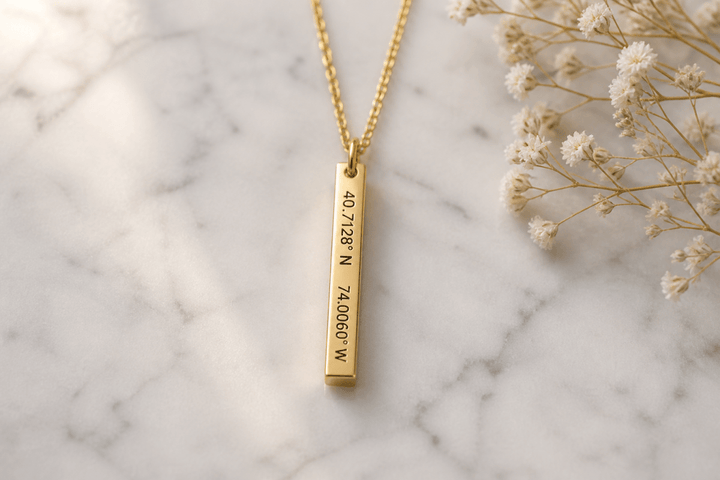
Save the exact places that become meaningful during the trip. Our coordinates guide explains how to verify a map pin, and the personalized jewelry collection offers a way to preserve one carefully chosen location after you return. A better trip is not the rarest pin on the map; it is one planned with curiosity, humility, and current information.
Shop the pieces in this guide


Bring the Place Home
The problem with a great trip is that it ends. Photographs sit on a phone; souvenirs end up in a drawer. The one format that survives is something you wear — which is why travellers increasingly mark a trip with the coordinates of the exact spot that mattered rather than a fridge magnet from the airport.
Pick one location per trip, chosen after you get home when you actually know which moment counted. A coordinates bracelet ($42) stacks trip by trip; a coordinates necklace ($89.99) is the version for the trip that changed something; a coordinates keychain ($35) works for anyone who does not wear jewelry at all.
Getting the numbers takes about thirty seconds — see how to find the coordinates of any place, or browse the coordinates collection.
Related guides
- How to find the coordinates of any place
- Why coordinates jewelry means more
- The complete guide to personalized jewelry
Or browse our coordinates jewelry.