September 15, 2020
7 Meaningful Trips to Add to Your Travel List

A travel list should reflect your curiosity, budget, mobility, and season of life—not someone else’s definition of a “must-see” destination. The most memorable journey may be an international adventure, but it could also be a nearby city you have postponed visiting or the hometown that shaped your family.
These seven trip ideas are intentionally flexible. Use them as prompts to choose a place that matters to you, then research current costs, entry rules, accessibility, weather, and official travel guidance before booking.
1. A trip connected to your family story
Visit the town where a parent grew up, the neighborhood where your grandparents lived, or a region tied to a family tradition. Ask relatives for addresses, recipes, names, and stories before you go so the itinerary includes more than landmarks.
Respect privacy and local context when visiting former homes or small communities. Public archives, museums, cemeteries, libraries, and community history organizations can help you learn without intruding.
2. A landscape unlike home
Choose a coastline, desert, mountain range, forest, or wide-open plain that changes your sense of scale. The goal is not to collect a dramatic photograph; it is to spend enough time outside to notice how the place works.
Check seasonal hazards and choose activities that match your experience. Reserve guided support when needed, carry the right equipment, and leave room in the itinerary for weather changes.
3. A city best explored slowly
Pick a walkable neighborhood and stay long enough to develop a small routine. Visit a market, use public transit, return to the same café, and plan only one major attraction per day. Slower travel can reveal everyday details that disappear on a checklist-heavy visit.
Learn basic local etiquette and useful phrases. Choose locally owned businesses when practical, and be considerate when photographing residents, homes, ceremonies, or working spaces.
4. A journey built around food
Travel for a regional dish, harvest, cooking tradition, or family recipe. Markets, food tours, farm visits, and cooking classes can connect the meal to the people and landscape behind it.
Research dietary needs in advance and keep expectations flexible. The most meaningful meal may be a simple specialty served in its everyday setting rather than a famous reservation.
5. A creative or learning retreat
Plan a trip around photography, writing, music, craft, language, or another skill you want to practice. A workshop provides structure, while unplanned time gives you space to respond to the place.
You do not need to produce a polished project. A sketchbook, field notes, or a small set of photographs can become a personal record of how the trip changed your attention.
6. A nearby place you keep overlooking
Look within a few hours of home for a museum, historic district, park, shoreline, or small town you have never explored. Shorter trips are easier to repeat and can deliver more rest because they require less transit and planning.
Treat the day with the same care you would give a major vacation: research one local story, make a thoughtful meal stop, and put your phone away for part of the visit.
7. A return to a place that changed you
Revisit a destination from childhood, a first trip together, or a turning point in your life. Some details will have changed, and that contrast is part of the experience. Avoid trying to recreate every moment exactly.
Bring an old photo or note, then make room for a new tradition. The return can honor who you were while acknowledging what has happened since.
Turn a travel list into a real plan
Choose one idea and write down the purpose, possible dates, realistic budget, and information you still need. Check official destination and travel-advisory sources close to departure because conditions change. Build an alternative plan for weather, closures, or personal circumstances.
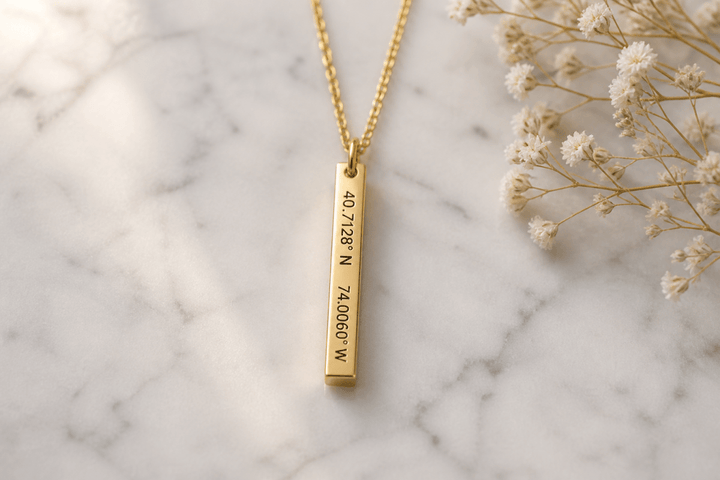
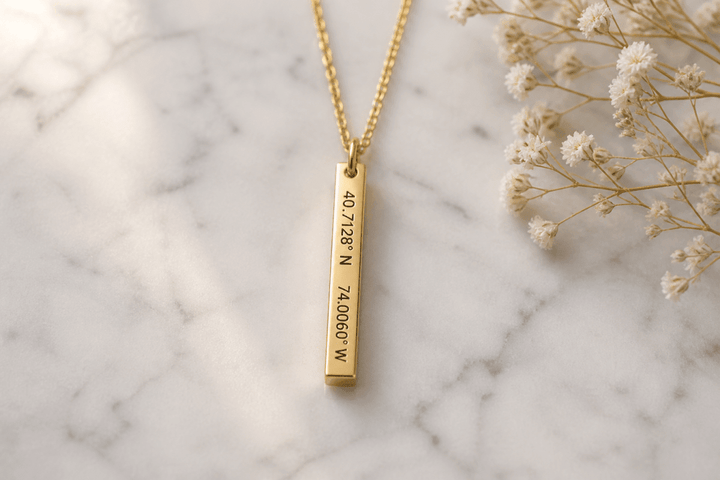
When a journey becomes part of your story, save the exact location in your map app. You can later use our guide to finding coordinates or browse personalized coordinates jewelry to turn the place into a wearable reminder. The value is not in completing all seven ideas; it is in choosing one that feels genuinely yours.
Revisit the list each year instead of treating it as a race. Your health, finances, relationships, and interests will change, and the right trip should change with them.
Shop the pieces in this guide


Bring the Place Home
The problem with a great trip is that it ends. Photographs sit on a phone; souvenirs end up in a drawer. The one format that survives is something you wear — which is why travellers increasingly mark a trip with the coordinates of the exact spot that mattered rather than a fridge magnet from the airport.
Pick one location per trip, chosen after you get home when you actually know which moment counted. A coordinates bracelet ($42) stacks trip by trip; a coordinates necklace ($89.99) is the version for the trip that changed something; a coordinates keychain ($35) works for anyone who does not wear jewelry at all.
Getting the numbers takes about thirty seconds — see how to find the coordinates of any place, or browse the coordinates collection.
Related guides
- How to find the coordinates of any place
- Why coordinates jewelry means more
- The complete guide to personalized jewelry
Or browse our coordinates jewelry.